-
-
Udine concerts
Udine concerts Udine concerts See all Udine concerts (Change location)
Today · Next 7 days · Next 30 days -
Artists
Get your tour dates seen by one billion fans: Sign up as an artist


Concert in your area for Latin and Folk & Blues.
Find out more about .
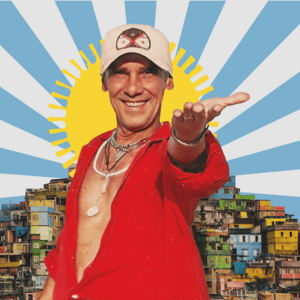
Born and raised by Spanish parents on the outskirts of Paris in the ‘60s, Chao’s earliest musical influences came from Latin artists including Bola de Nieve. By the late 1970s the multilingual Chao had been drawing influences from the UK rock scene with the likes of The Clash, The Jam and Dr. Feelgood, and in 1983 formed the Spanish/English rock group Hot Pants. The band earned significant praise around Paris but failed to have mass appeal. After the disbandment of Hot Pants the guitarist, vocalist and keyboard player founded the Latin alternative group Mano Negra alongside his brothers and cousin Santiago Casariego. To hone their skills the group began performing for commuters on the subway, which meant playing a wide variety of different genres and styles.
In 1988 Mano Negra released the reworked Hot Pants single “Mala Vida” which became a surprise hit in France. Utilising the new found success, the band signed with Virgin Records who issued their debut album “Patchanka” in 1989. Whilst failing to find popularity in the English speaking market, Mano Negra became hugely successful in large parts of Europe including the Netherlands, Italy and Germany, as well as South America. In support of the album the band embarked on a port tour of Latin America, where the group travelled by boat alongside actors and circus acts and often political guerrilla groups. By the time the tour had run its course, tensions were running high within the group and Manu Chao moved the band to Madrid, Spain, where Mano Negra ultimately disbanded.
During his time in Madrid Manu formed the band Radio Bemba Sound System with a number of former Mano Negra members. The aim was to craft the sound of street and bar music from a host of cultures, which led to the group spending several years travelling through Latin America recording as they went. The resulting collection of songs entitled “Clandestino” released in 1998, are far-removed from the punk influenced sound of Hot Pants and Mano Negra, and represent the sound of the street. The album spawned the singles “Bongo Bongo” and “Clandestino”, and later won the Best World Music Award at the Victoires de la Musique in 1999.
After a pair of shows in Los Angeles, California, U.S. in 2000, Manu Chao released this follow-up album “Proxima Estacion: Esperanza”. The album represented Chao’s long-standing interest in Caribbean music and became instantly popular in France and South America. In 2002 the live album “Radio Bemba Sound System” was released showcasing the band’s live performances, and in 2004 Chao released the French-speaking album “Sibérie m’était contée”. In 2007, after a significant hiatus, Chao released the album “La Radiolina”, meaning little radio in Italian. Led by the single “Rainin’ in Paradize”, the album had been performed at the year’s Coachella festival and earned positive reviews from critics.
If doing these reviews have taught me anything, it’s that preconceptions are pretty much always wrong. It’s almost like it’s good to be properly informed about music. Who’d have thunk it. With that in mind, I don’t think I’ve ever been more profoundly wrong about an artist’s live sound than I was about Manu Chao. Born José-Manuel Chao, the Spanish/French singer songwriter has been talked about in the same breath as Bob Marley and Joe Strummer at points in his career. However, the place that those comparisons are most visibly justified is in every live show he does. He may have been partially responsible for the “World Music” resurgence at the turn of the 21st century but there is nothing sedate or relaxing about it live shows, they are loud, fast, heavy and always inclusive. This makes Chao and his shows legitimately punk rock in a way very few things that claim to be punk rock are these days. The best part however, is how they are fast, loud and heavy without losing any of the intricacies, subtleties and quirks that make his music so indispensable. You might be able to pogo yourself silly to more than a few of the nights songs but you’ll most likely be pogoing to a fusion of punk with ska, flamenco and reggae influences stirred in liberally at the same time. This creates the mother of all carnival atmospheres; all inhibitions thrown happily to the wind for the sake of a monumental good time that will still make one feel pretty cultured even as an entire concert hall loses their collective mind. It’s the kind of thing that needs to be seen to be truly believed, and while he might not tour English speaking shores as many times as we’d like, when he does, you’d be a fool to miss it!
 william-howard-2


 Log in to your account